
Kids' piano lessons in Toronto · VMA
What Your Child Learns in Their First Three Piano Lessons
By Visionary Music Academy · Published
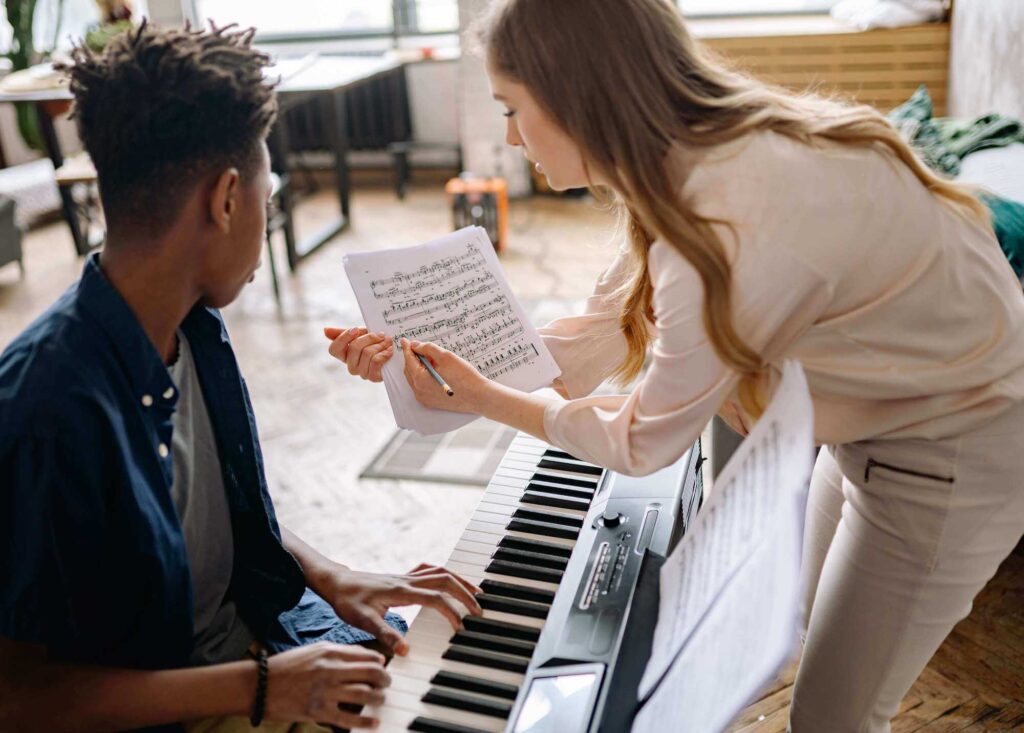
If you are searching for children's piano lessons in Toronto, you may wonder what the first few weeks actually look like. A good beginning does not rush a child through a book — it helps them feel comfortable at the keyboard, curious about sound, and proud of small things they can already play.
Here is what most children learn in their first three piano lessons at Visionary Music Academy, and a simple activity you can try at home together before the first lesson.
Lesson 1: Sitting comfortably and finding the keys
The first lesson is about feeling at home at the piano. Your child learns how to sit with relaxed shoulders and a comfortable arm height, how to curve their fingers gently, and how to find a few keys by name. They might play a simple two- or three-note pattern and hear it make something that sounds like music. Nothing needs to be perfect — the goal is a child who wants to come back.
Lesson 2: A short melody and steady rhythm
In the second lesson, your child often begins a short melody — something they can recognize and play again. They start to feel a steady beat, clapping or playing along with the teacher. Reading notes on the staff may begin, but it usually starts with just a few notes rather than the whole keyboard. The focus is on playing something satisfying, not on passing a test.
Lesson 3: Putting the pieces together
By the third lesson, many children can play a short tune with a steady rhythm and talk about what they enjoyed. They may start linking the notes they see on the page to the keys they press. The teacher gets a clearer picture of how your child learns and can suggest a personalized path forward — whether that means a group program, private coaching, or simply more time at the keyboard.
Try this at home: clap the beat, then play it
You do not need a piano for this. Pick a song your child knows and enjoys. Clap the steady beat together — not the melody, just the even pulse underneath. Once that feels comfortable, let your child tap the rhythm of the melody on a table, a cushion, or any keyboard you have. The goal is to feel the difference between a steady beat and the pattern of the tune.
This simple activity builds two skills the first lessons depend on: feeling a steady pulse and listening for the shape of a melody. If your child enjoys it, that is a good sign they are ready to explore more at the keyboard.
Choosing a first music class
Private piano lessons let your child learn at their own pace — starting with the music they enjoy and building from there. The teacher adjusts each lesson to how your child responds that day, so the pace stays comfortable rather than pressured.
If you are also considering a group setting, Musical Beginnings is VMA's group discovery program. It can be a good way to explore instruments and musical ideas alongside peers. Ask us about current group availability — we can help you decide which option fits your child and schedule.
A five-minute practice routine you can try tonight
You do not need a piano for this. Set a timer for five minutes and try this simple routine together:
- 30 seconds — clap the beat. Pick a song your child knows and clap the steady pulse together. Just the beat, not the melody.
- 90 seconds — find adjacent keys. If you have a keyboard or piano, ask your child to find two keys next to each other and play them back and forth. If not, tap two fingers on a table in the same pattern.
- 2 minutes — call and response. Play or sing a simple three-note pattern (like do-re-mi). Ask your child to repeat it. Take turns being the leader.
- 1 minute — your child chooses. Let your child pick anything to play or sing. This is the most important part: they get to make their own musical choice.
Age and pace vary — a five-year-old may spend the whole time on the first step, and a twelve-year-old may race through all four. The goal is a small, repeatable routine your child enjoys, not a fixed timetable.
Book a piano assessment for your child
A 30-minute Musical Assessment is a starting conversation, not an exam. Your child meets a senior instructor, explores the keyboard together, and you can share their age, experience and goals. It is the easiest way to find the right starting point — whether your child is five or seventeen.
Book a piano assessment for ages 5–17
Prefer to read more first? Explore our piano lessons page or our guide on what age to start piano.