
For curious families · Toronto
Music apps or music lessons: what should your child try next?
By VMA Team ·
Your child keeps tapping out beats, singing little tunes or asking to try the piano. Do you open a music app, look for lessons, or try a bit of both? Start with one question: what do they wanna do next?
Pick the next small step
They wanna try sounds
Start with a small free-play activity. Tap a beat, try a tune and let them choose what to change.
Try free Song Builder →They wanna play an instrument
Explore the instrument they keep asking about. Bring their favourite song and your questions to a teacher.
Explore instruments and lessons →They have an idea and feel stuck
Ask for help with that one idea: a rhythm, a tune, some words or a recording. You don't need a finished song.
Explore songwriting support →What can a music app give you?
A small place to experiment. In VMA Song Builder, you can tap drums, add melody and bass, listen back, and download a WAV audio file. You can play and download without an account or an email address.
Try changing one sound. Does your child like a slower beat? A higher tune? A low note underneath? Let them show you their choice. An app session can be a starting point for a conversation about the music they enjoy.
Our current tool makes short musical sketches. Save the project file if you wanna edit it later; browser storage can be cleared. It doesn't email recordings or save projects to a cloud account.
What can a teacher help with?
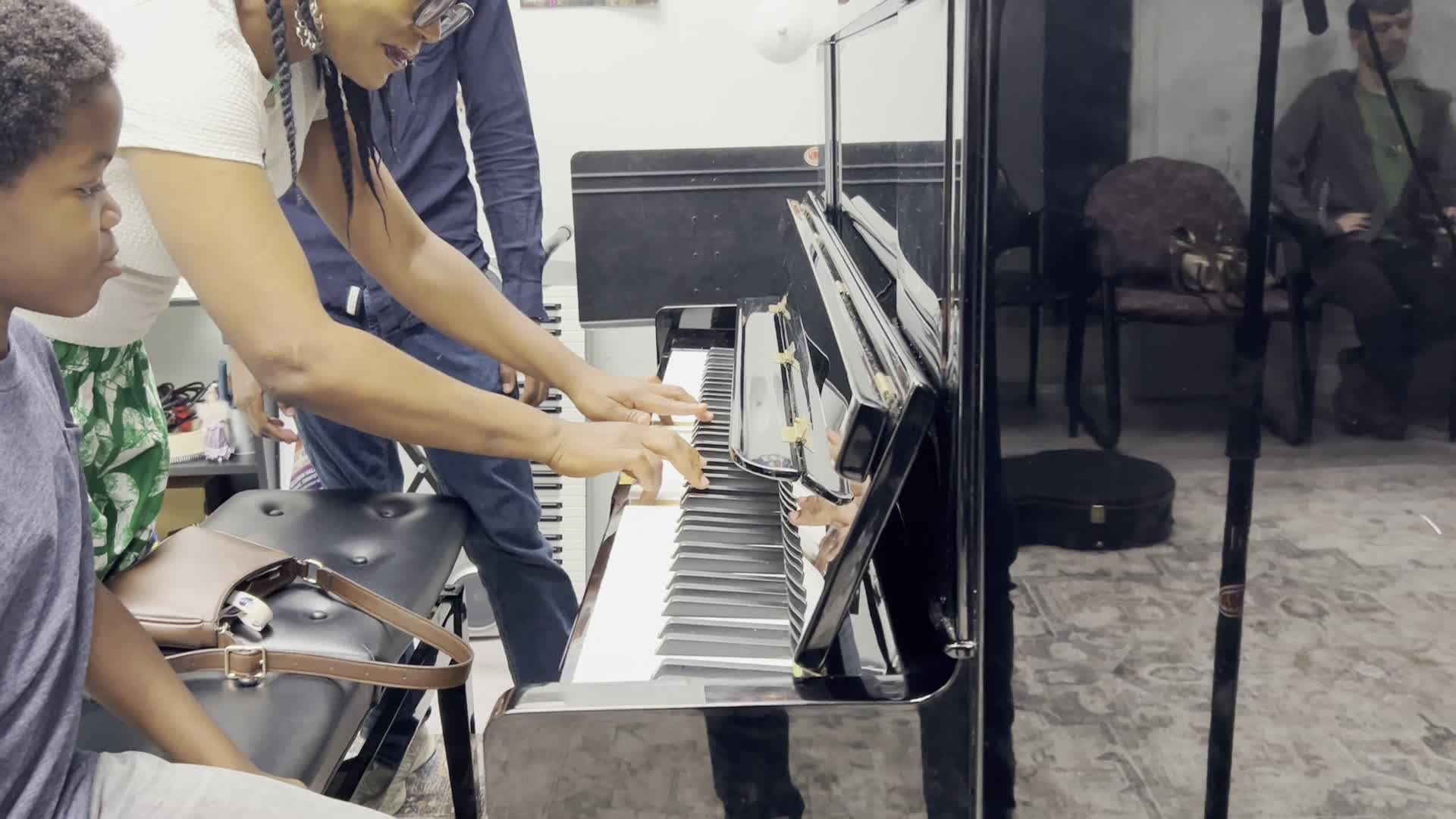
A teacher can listen to an attempt, answer a question and help choose something useful to work on next. That might mean finding a note on the piano, changing a guitar chord, singing a phrase or building out a song idea.
Tell the teacher what your child likes and where they get stuck. Ask what to try between lessons and what a parent can do to help. You can bring a tiny idea; you don't need to bring a polished performance.
The Music Teachers National Association suggests asking prospective teachers about their teaching experience, materials, practice expectations and the parent's role. Those questions can help you understand the fit. Read MTNA's teacher-selection guide.
Try this together for five minutes
- Open Song Builder. Tap a few drum squares, then press Play.
- Stop. Add three melody notes. Play again and ask, “Which bit do you like?”
- Change one thing your child chooses. Listen to the new version.
- Ask, “What do you wanna try next?” It might be more beat-making, a real instrument, singing or a break.
Keep the volume comfortable and explore alongside younger players. This is a shared activity, not a test of talent or readiness. You can also try our free online keyboard or follow the first-beat guide.
Notice what they ask to do again
You don't need to score the activity. Listen for a specific interest: “Can I play that on the piano?” “Can we add my voice?” “How do I make that guitar sound?” Those are useful questions to share with a teacher.
If your child wants keys, explore piano lessons. If they reach for strings, explore guitar and ukulele. If making a whole track is the exciting part, look at music production. Families still exploring can ask about Musical Beginnings.