
Private singing lessons in Toronto · VMA
What Happens in Your First Private Singing Lesson
By Visionary Music Academy · Published
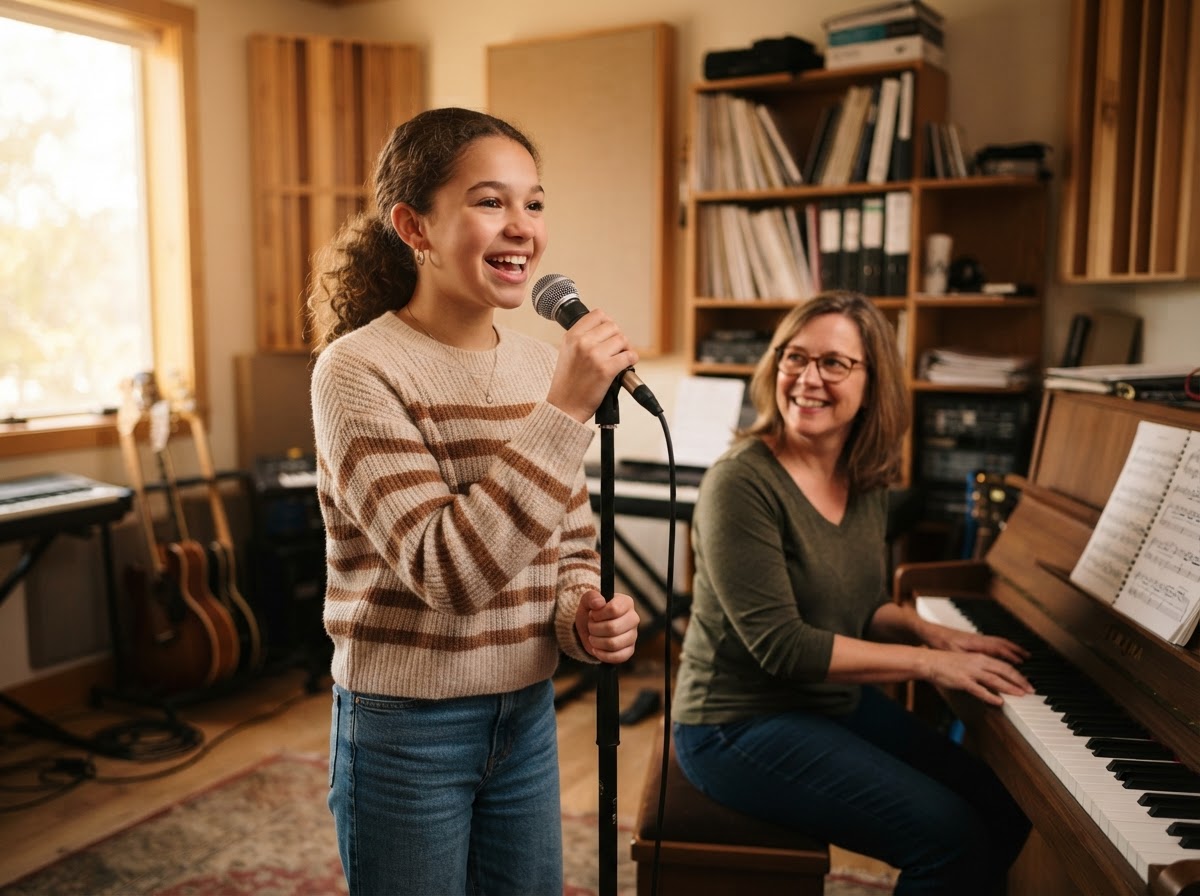
Searching for vocal lessons in Toronto or private singing lessons nearby? You might feel uncertain about what a first lesson involves — especially if you have never studied voice before. A good first lesson is gentle, practical and encouraging. It is not an audition.
Here is what to expect in a first private singing lesson at Visionary Music Academy, plus a simple humming and pitch-matching exercise you can try at home right now.
A gentle vocal warm-up
Every voice lesson begins with warming up. Your teacher guides you through simple breathing and gentle sounds — not demanding high notes or loud singing. You might hum, slide between two pitches, or make soft vowel sounds. The goal is to help your voice feel relaxed and ready, not to test how high or low you can go on day one.
Matching pitch by listening
After the warm-up, your teacher plays short notes on the piano and invites you to match them with your voice. This is not about being perfect — it is about listening carefully and letting your voice respond. Pitch matching is a skill that grows with practice, and a first lesson helps the teacher understand where you are starting from.
Trying a line of a song
If you bring a song you enjoy, you might try singing a single line or chorus together. If you do not have one yet, your teacher may suggest a simple melody to explore. The focus is on breath, phrasing and comfort — not on performing. You can share what kind of music you listen to and what you hope to sing, so the teacher can plan lessons that fit your goals.
Try this at home: hum and match
Sit comfortably and take a relaxed breath. Hum a single, easy pitch — something that feels natural in your voice, not pushed high or low. Hold it for a few seconds, then stop. Now try to hum the same pitch again. Did it feel similar? This is the foundation of pitch matching: hearing a sound and letting your voice find it.
You can also try humming a short pattern of three notes — up, then back down — and repeating it. Keep it gentle. If something feels strained, stop and rest. Voice lessons build on comfort, not on pushing through tension.
What do we do at a first vocal assessment?
A 30-minute Musical Assessment at VMA is a relaxed conversation, not an audition. Here is what typically happens:
- We start by talking. You share what kind of music you enjoy, what you hope to work on, and whether you have sung before.
- Your teacher guides a short warm-up — gentle humming, soft vowel sounds, and easy slides between two nearby pitches in a comfortable range.
- You try a brief pitch-matching exercise: the teacher plays a few notes on the piano and you echo them with your voice. There is no pass or fail — it helps your teacher hear where you are starting from.
- If you have a song in mind, you might try a single line together. If not, your teacher may suggest a simple melody to explore.
- You and your teacher talk about next steps — what to practise, what to bring to lessons, and whether private coaching or a group setting suits your goals.
A gentle pitch-matching example: your teacher plays three notes — say middle C, then the E just above, then back to C. You hum or sing each one after you hear it. Keep it soft and comfortable; the goal is listening, not volume. If a note feels too high or too low, your teacher moves to a range that fits your voice.
Book a voice assessment
A 30-minute Musical Assessment is a starting conversation, not a performance. You meet a senior instructor, explore your voice together, and share your goals and experience. Whether you are a beginner or returning to singing, it is the easiest way to find the right starting point.
Book a voice & singing assessment
Want to read more first? Explore our voice lessons page or our guide on finding the right starting point for singing.